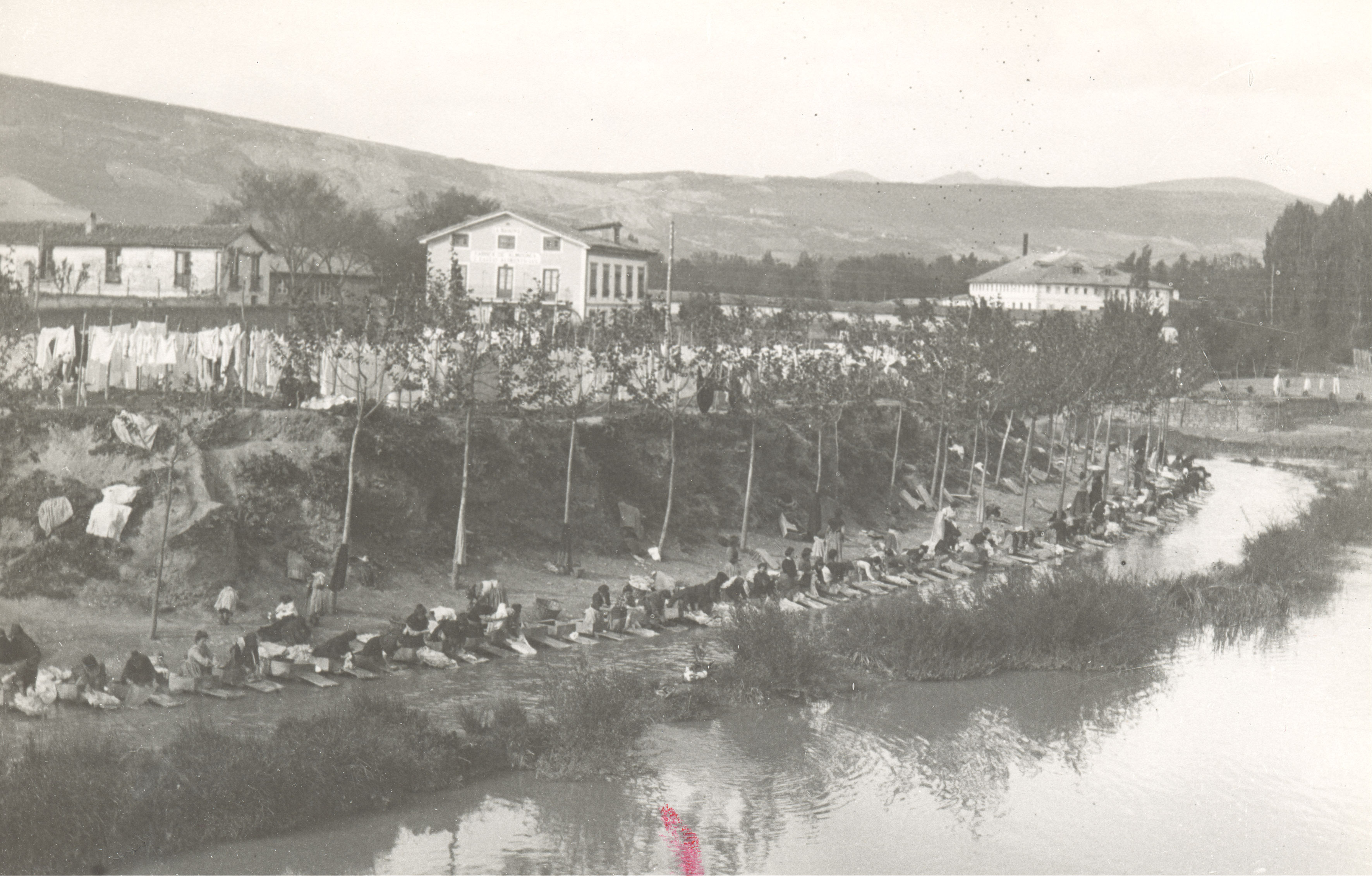
The occupation of washerwoman was one of the most common jobs for women in the 19th and early 20th centuries. It was also one of the hardest. There are a number of washing places located on the banks of the river Arga. Here, the women, often with the help of their young daughters, would wash the clothes, kneeling on an empty sack folded inside a sardine box, and then hang the clothes out to dry on the clothes horses, paying one ochena (10 centimes) for each section used. These washing places were one of the few public spaces where women could meet up, and so they became something more than a way to forget about their double working days. The women, kneeling in long lines, would respond with good humour to the shouting and cat calls of the builders working in the street of Descalzos in Pamplona by singing: "Builder, love of my life, I love you so much that I hope you fall off the highest scaffold"
In the course of the 20th century, with the arrival of running water to the homes in Pamplona, the washerwomen gradually lost their importance as a job sector and social group. For many women, not only did this involve the loss of a job opportunity but they also had to give up their place for meeting up, chatting and helping each other out.